Article
|
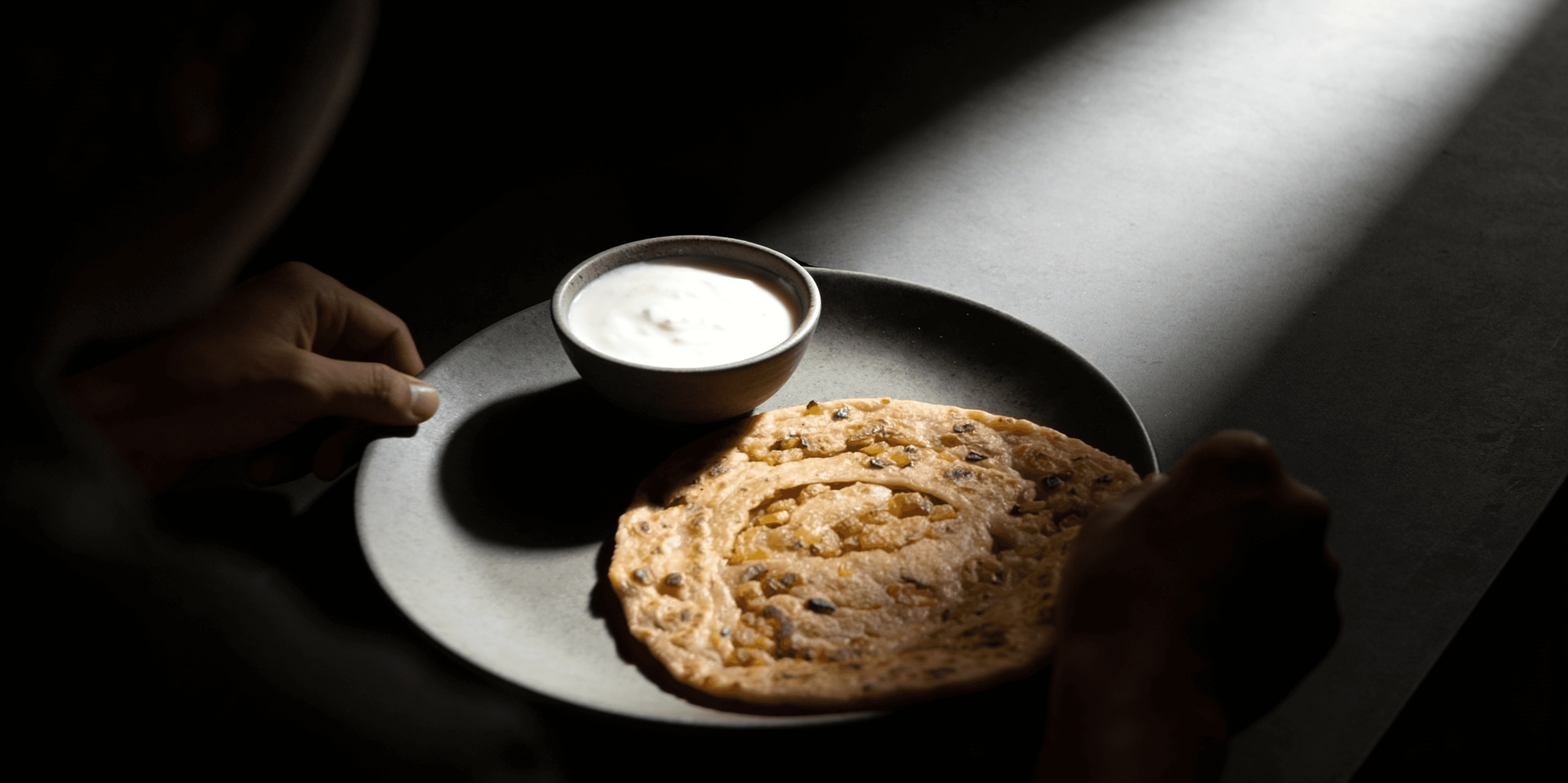
Two people sit down to eat the same breakfast: a hot aloo paratha with curd. For one person, the meal causes only a small rise in blood sugar. For another, it sends glucose levels soaring. This isn’t speculation. In a study by Niteesh K. Choudhry, Shweta Priyadarshini, Jaganath Swamy, and Mridul Mehta [ doi: https://doi.org/10.1101/2024.02.08.24302542], 488 individuals with type 2 diabetes in India consumed the same standardized meal—aloo paratha with curd. Yet their postprandial glycaemic responses ranged from 10 to 170 mg/dL/h, a 17-fold difference to the exact same food.
Prediction Versus Prescription: Two Fundamentally Different Questions
At first glance, prediction and prescription might seem like closely related tasks. After all, if an algorithm can predict that a patient is at high risk for hospital (re)admission, should not the healthcare provider be able to recommend interventions to reduce that risk? If a wearable device predicts poor sleep tonight based on late caffeine consumption, doesn't that suggest avoiding caffeine will improve sleep?
The answer is "not necessarily".
A predictive model thinks like: "Given what I observe about you—your demographics, biomarkers, behaviors, and past outcomes—what is likely to happen next?"
This is an associate model based on existing data.
A predictive model learns patterns: people who drink caffeine after 6 PM tend to report worse sleep. High readmission risk scores correlate with certain patient characteristics and prior hospitalisations.
A smartwatch algorithm might predict that you will sleep poorly tonight based on your elevated evening heart rate, recent caffeine intake, and low step count today. This prediction could be accurate—these variables may indeed correlate with poor sleep in your historical data. But the prediction alone does not tell you whether changing your caffeine intake, taking an evening walk, or practicing relaxation exercises will causally improve your sleep tonight.
The association between caffeine and poor sleep in your data might be confounded by stress: perhaps you drink coffee when you're anxious, and anxiety—not caffeine—is the true cause of sleep disruption. In this case, cutting caffeine won't help; managing stress will.
High predictive accuracy on observational data does not guarantee that manipulating a predictor will produce the intended outcome.
Confounding: The Hidden Third Variable: The presence of variables that influence both the predictor and the outcome, creating a spurious association.
In longitudinal personal data, the direction of causation can be ambiguous or bidirectional. Does poor sleep cause reduced physical activity the next day, or does low activity cause poor sleep the following night—or both?
Predictive models trained on observational time series can learn associations in either direction (or both), but they do not distinguish cause from effect. When there is an intervention—when there is a deliberate change to a behavior or introduction of a treatment—the model's boundary of observational regime is broken i.e the model's predictions may no longer hold.
Bridging the prediction-action gap requires counterfactual reasoning—the ability to answer "what if" questions.
What if caffeine is eliminated after 5 PM? What if daily physical activity level is introduced?
Answering these questions is not possible from observational data alone. This requires
1. Experimental manipulation: N-for-1 trials that directly test the effect of interventions.
2. Causal inference from observational data: Methods that use assumptions, and statistical techniques to estimate causal effect on observational data.
In an N-of-1 trial, a single person undergoes multiple periods of different treatments, behaviors, or exposures in a planned sequence—often randomized and counterbalanced. By comparing outcomes across these within-person treatment periods, the individual effectively serves as their own control, eliminating between person confounding and enabling direct estimation of the personal treatment effect.
Three powerful causal inference methods enable researchers to estimate individual treatment effects from observational personal health data: the G-formula, Instrumental Variables (IV), and Model-to-Twin Randomization (MoTR). Each method addresses different challenges and requires different assumptions.
G-Formula:
1. Builds a model on how outcomes vary based on treatment, confounders, and history
2. Use the built model to predict outcomes by hypothetically changing treatment and/or confounders in an iterative manner
3. Average the predictions to determine causal effect
Outcome[t] = f(Treatment[t], Confounders[t], Outcome[t-1], ...)
Scenario: "Does exercising causally reduce my weight?"
Segment: Each week is a period
Challenge: Exercise is subjective and the volume can vary based on feeling healthy and motivation (confounding).
Confounders: Prior week's weight, stress level, diet quality, sleep hours
Model: Random forest predicting weight[t] from exercise[t], confounders[t], weight[t-1]
Standardize:
1. Simulate "always exercise ≥3 days/week" → predict average weight"
2. Simulate "exercise < 2 days/week" → predict average weight"
3. Difference = causal effect of exercise on weight
Result of the model is the description of the "Difference".
Instrumental Variables (IV):
When there are unmeasured confounders, causal effects can be estimated by determining an "instrument" i.e variable that
1. Affects the treatment
2. Affects the outcome only by the above treatment
3. Is not affected by confounders
Scenario: Does alcohol trigger AFib episodes.
Challenge:
1. Can't randomize alcohol intake
2. Imperfect compliance (sometimes drinks even when trying not to)
3. Unmeasured confounders (stress, sleep quality, diet)
Instrument: Randomized prompts to avoid alcohol on certain days
First stage: Prompts reduce alcohol intake (but not perfectly)
Exclusion: Prompts don't directly affect AFib—only through alcohol reduction
Second stage: Estimate AFib risk using predicted alcohol from first stage
Result: Alcohol causally increases AFib risk by X% for this individual.
Model-To-Twin Randomization (MoTR):
Monte Carlo method that creates synthetic "twin" versions of observed time series by simulating what would have happened under alternative treatment sequences. This is similar to running a randomized trail virtually by generating counterfactual versions (twin).
Scenario: "Does increased physical activity improve sleep?"
Challenge:
1. Days with higher physical activity might have better sleep due to confounding (e.g., less stress, better weather)
2. Sleep and activity have bidirectional effects (feedback loop)
MoTR approach:
Periods: Each day is a unit
Model: Random forest predicting sleep[t] from steps[t], steps[t-1], sleep[t-1], weather[t], stress[t]
Simulate twins:
Twin A: Set physical activity = high every day, propagate sleep dynamics
Twin B: Set physical activity= low every day, propagate sleep dynamics
Repeat 1,000 times with stochastic noise
Compare: Average sleep in high-physical activity twins vs. low-physical activity twins